
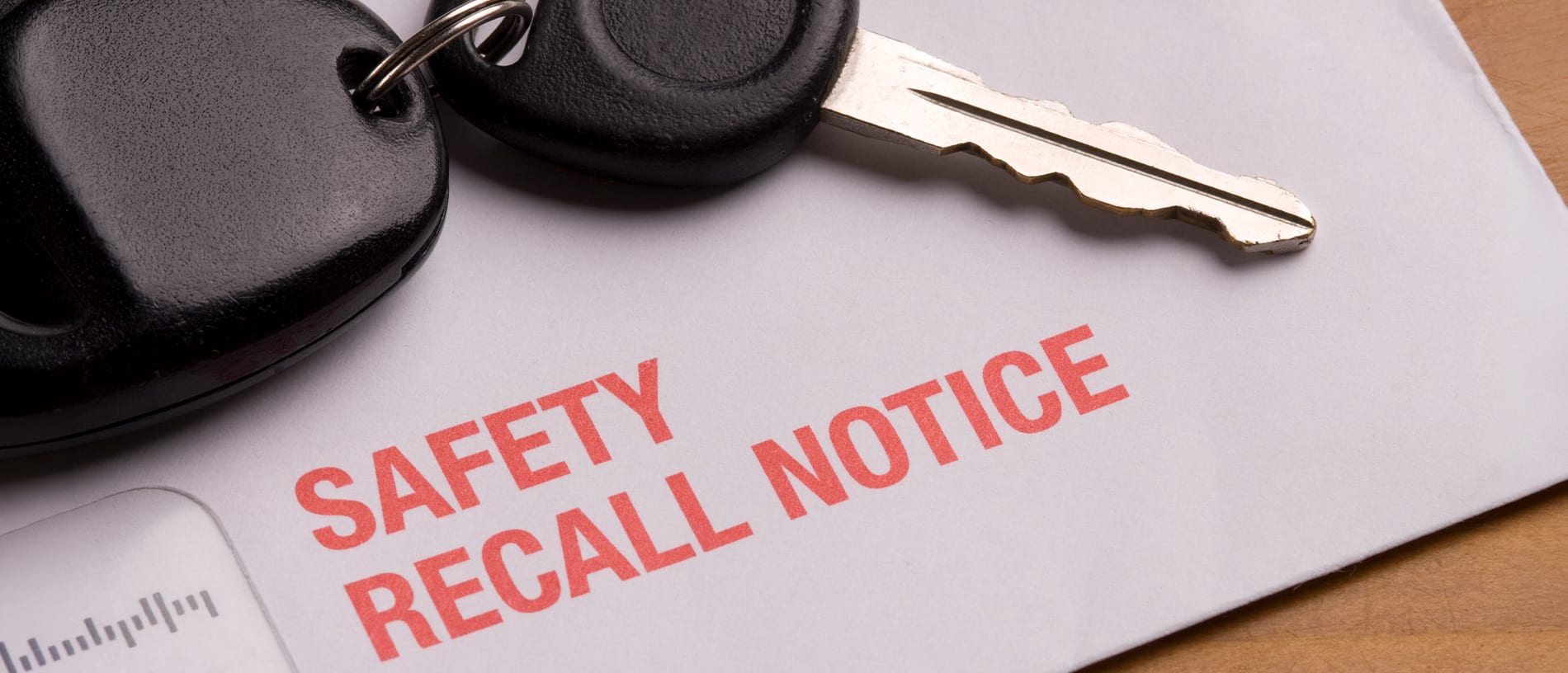
Understanding how a recall notice impacts your legal rights and when a safety defect qualifies for a California lemon law buyback.
By Christine Morano
If you’ve recently received a recall notice in the mail, you may be worried you’ve gotten stuck with a lemon. Many consumers who receive these notices begin to question whether or not their vehicle is defective and now qualifies for remedies under California’s lemon law. It’s a reasonable question, but the short answer is no, a recall alone does not make a vehicle a lemon.
What is a Recall?
A recall is issued by a manufacturer or the National Highway Traffic Safety Administration (NHTSA) when they determine that a vehicle has a defect that poses a safety risk for consumers, or fails to meet federal safety standards. For example, FCA recently recalled certain 2020-2025 Jeep Wrangler 4Xe and 2022-2026 Grand Cherokee 4Xe vehicles due to possible fire risk and failure of the vehicles’ high voltage battery. Nissan also recently recalled certain 2024-2025 Rogue vehicles stating that the gears in the electronic throttle body may break, increasing the risk of a crash. Recalls are issued often, lemon and depending on what’s happening with your vehicle, you may have more options than
you think.
When a recall is issued, the manufacturer is required to notify its affected consumers by providing a notice of the recall, and offering to repair the defect free of charge. The fix may be as simple as a software update or may require more intensive repairs, but in most cases, it takes a single service visit to address and resolve the recall completely.
Recalls are, in many ways, the system working as intended – a problem is identified, a solution is developed, and vehicles are fixed.
When a Recall May Mean You Have a Case
When a manufacturer issues a recall, it is making a formal admission: many vehicles of that specific year, make and model contain a safety defect. That admission matters. If the recalled defect has actually shown up in your vehicle, meaning you’ve experienced the symptoms of that recall, California law may give you legal options even if the repair is completed.
Under California’s Lemon Laws, a vehicle sold with a significant safety defect can be considered a breach of the implied warranty of merchantability and entitle the buyer to a cash settlement or diminished value recovery. This theory does not require multiple repair visits, only a single visit where the defect appeared may be enough. If that sounds like your situation, call us for a free case evaluation.
It is imperative to note that recalls are often issued as a precautionary measure. This means that your vehicle may not be exhibiting symptoms of the recall or carry the recall defect at all. It is still recommended to bring your vehicle in for service whether or not you experience symptoms of it, as a technician can better determine whether or not the defect is present and perform preventative maintenance on your vehicle if necessary.
| Feature | Manufacturer Recall | Lemon Law Claim |
|---|---|---|
| Primary Trigger | A safety defect or non-compliance identified by the manufacturer or NHTSA. | A persistent defect that the dealer cannot fix after a “reasonable number” of attempts. |
| Scope | Affects a specific group of vehicles (make, model, and year). | Affects your individual specific vehicle. |
| Initiation | You receive a letter in the mail or check your VIN online. | You must initiate a legal claim or request a buyback from the manufacturer. |
| Resolution | A free repair, part replacement, or (rarely) a refund/replacement. | A full vehicle buyback (refund), a replacement vehicle, or a “cash and keep” settlement. |
| Cost to Owner | Completely free; the manufacturer covers parts and labor. | Often no out-of-pocket cost if handled by an attorney (manufacturer pays legal fees). |
| Legal Impact | The manufacturer’s own admission of a defect. If the defect appeared in your vehicle, you may have a claim even with only one repair visit. | If a recall repair fails multiple times, it can become a Lemon Law case. |
When a Recall Could Become Part of a Lemon Law Case
There are two main ways a recall can open the door to a legal claim.
First, if the recalled defect has appeared in your vehicle, meaning you experienced the symptoms and brought the vehicle in for repair, then California’s lemon law may apply. When that defect shows up in your car, it supports a claim that the vehicle was not fit for its ordinary use at the time of sale. Cases under this theory typically resolve for a cash settlement or diminished value payment, and often only require a single repair visit to support the claim.
Second, if the recall repair is performed but the problem comes back, or the vehicle requires additional repairs for the same issue, those visits count toward a repurchase claim under California’s lemon law. Two or more repair attempts for the same defect can support a full vehicle buyback.
What You Should Do After Receiving a Recall Notice
- Schedule the recall repair promptly with an authorized repair facility of your vehicle’s manufacturer.
- Track the dates your vehicle was out of service. 30 cumulative days is a threshold worth knowing.
- Document everything. Save every repair order from every dealer visit.
- Keep a clear record of all communications with the manufacturer and/or dealerships.
- Call us for a free case evaluation if your issues persist.
- At LemonBuyBack.com, we serve car owners statewide across all of California.
Fee Case Evaluation
We go after the manufacturer to pay our fees as part of your settlement when we win. Visit lemonbuyback.com to get started. California consumers only.
Insights provided by Attorney Christine Morano of the Lemon BuyBack Team
This article is for general informational purposes only and does not constitute legal advice. Reading this post does not create an attorney-client relationship. Results vary based on individual facts. Contact our office to discuss your situation.
